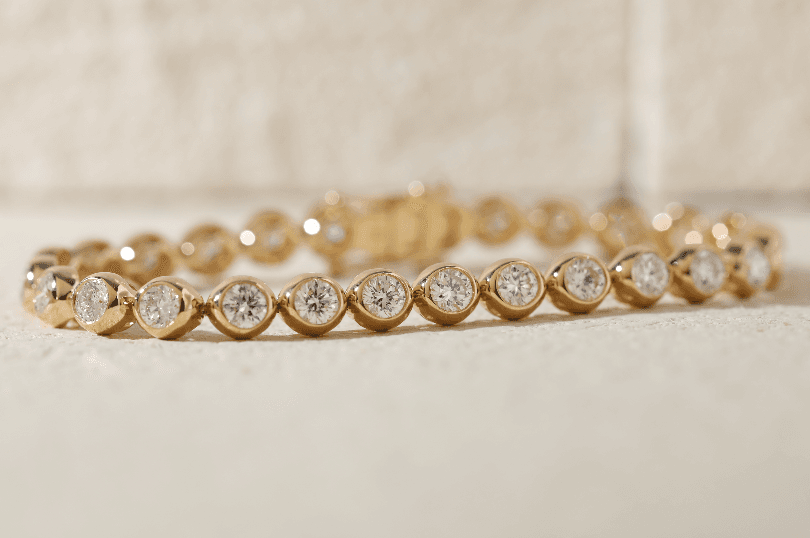
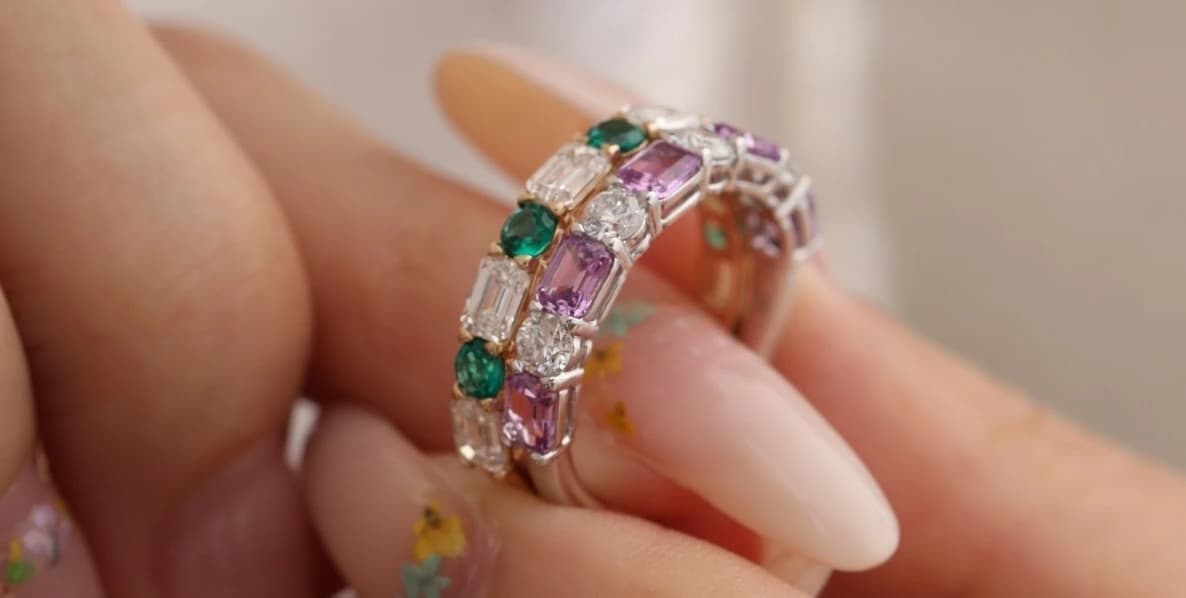
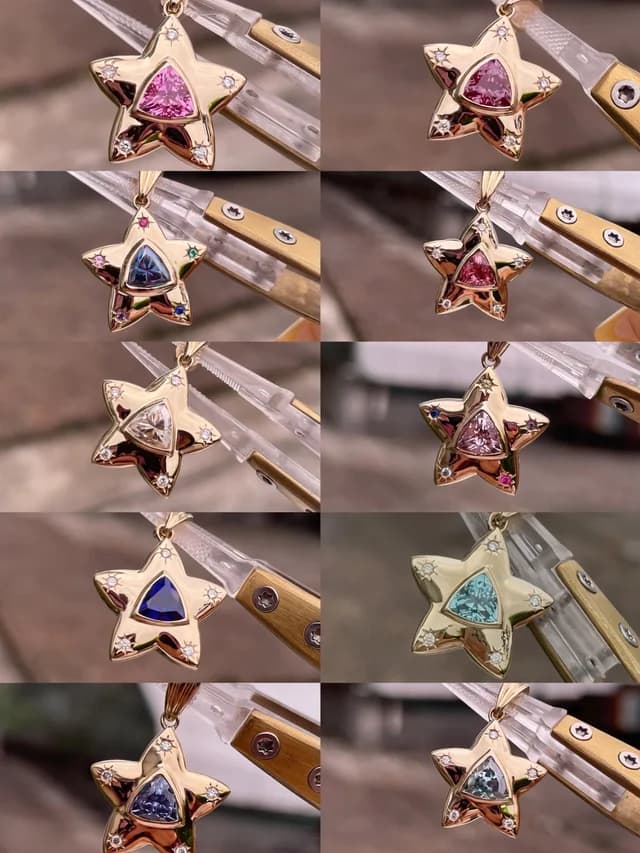
The stone is real.
The harm is not.
Every stone in a Quorum piece is lab-grown. This is not a compromise or a workaround. It is a deliberate choice — one grounded in chemistry, ethics, and the straightforward reality that mining fine stones causes serious, documented harm to the people and environments it passes through.
The price you don't see on the tag.
Extracting a single carat of diamond displaces, on average, 250 tonnes of earth. The open-pit mines that produce most of the world's diamonds and coloured gemstones are visible from space — craters that will not recover in any human timescale. The rivers near artisanal mining sites carry mercury for generations. Communities built around mines are subject to land seizure, water contamination, and economic dependency on an industry with a long, documented history of abandoning those communities when the deposit runs out. The 'conflict diamond' label addresses only the funded-armed-conflict fraction of the harm. The environmental destruction, child labour in ruby and sapphire mines, and community displacement run far deeper — and are far less discussed.
Same carbon. Same crystal. No mine.
A lab-grown diamond is not diamond-like. It is not a simulant. It is carbon — arranged in the same cubic crystal lattice, under conditions that replicate the earth's mantle — grown in weeks in a controlled facility rather than over billions of years underground. The result is chemically pure: no geological impurities, no earth debris, no conflict in the supply chain. The hardness is the same (10 on the Mohs scale — the maximum). The refractive index is the same (2.42 — the source of diamond's characteristic brilliance). The IGI and GIA grade lab-grown diamonds on the same 4C scale used for mined stones, issuing identical reports. There is no optical difference, no structural difference, nothing that matters to beauty or durability that differs. Only the origin.
Lab-grown diamonds are grown in clean, controlled environments free from the geological impurities and mineral inclusions that affect mined stones. The result is frequently a higher-clarity stone than a mined equivalent at the same price.
Both of the world's most respected grading bodies issue identical 4C reports for lab-grown diamonds. A lab D/VVS1 meets exactly the same grading standard as a mined D/VVS1.
Every Quorum stone traces to a facility, not a disputed mine. There is no ambiguity in the origin — no region, no operator, no extraction event to investigate.
Ruby, sapphire, and emerald mining has persistent, documented use of child labour — particularly in Myanmar, Madagascar, and parts of South America. Lab-grown coloured stones have no equivalent risk.
Lab-grown diamonds produced with renewable energy emit a fraction of the CO₂ per carat of mined equivalents. Quorum sources from facilities with verified low-emission production.
You are not settling. You are choosing correctly.
Choosing a lab-grown stone is not a budget decision dressed up in ethics. It is the choice of a stone that performs identically in every way you will ever experience — hardness, brilliance, durability, grading — while refusing to fund the displacement, pollution, and exploitation that the mined supply chain has produced for decades. Wear it knowing exactly what it is, and exactly what it is not.
Can a jeweller tell the difference between lab-grown and mined?
Not by eye, and not with standard gemological tools. Specialised equipment can detect differences in growth patterns, but in terms of appearance, hardness, and wearability, they are indistinguishable.
Do lab-grown stones hold their value?
Lab-grown diamonds have lower resale value than mined — as do most mined diamonds outside investment-grade stones. Quorum pieces are priced at manufacturer cost, not retail, so you are not overpaying to begin with.
Do lab-grown coloured stones fade?
No. Colour in a gemstone is determined by crystal structure and trace elements — not origin. A lab ruby holds its red the same way a mined ruby does, for the same reason.
What is moissanite, and how is it different from a lab diamond?
Moissanite is silicon carbide — a different mineral entirely, not a diamond. It is still lab-grown and conflict-free, with very high brilliance and a Mohs hardness of 9.25. It is optically similar to diamond but chemically distinct. Both are available across Quorum drops.